OEM / Private Label
Custom Logo Gym Weights: OEM Checklist for Plates, Barbells and Dumbbells
A factory sourcing checklist for private label buyers ordering custom logo plates, barbells, dumbbells, collars and retail packaging.
Introduction
Custom logo gym weights can help importers, distributors and fitness brands build a recognizable product line. A buyer can customize weight plates, dumbbells, Olympic bar end caps, collars, cartons and retail packaging. But OEM customization also adds risk if the logo method, artwork, material, MOQ, sample approval and packing details are not confirmed clearly before mass production.
The most common problems are not dramatic. They are practical: a logo is too small, the color does not match the buyer's brand, carton labels are inconsistent, the packaging cannot protect the product, or the sample approval comments are not carried into bulk production.
This checklist explains what overseas buyers should confirm before ordering custom logo gym weights from a factory supplier.
Quick Answer
Before ordering custom logo gym weights, confirm product type, logo method, artwork file, logo size, logo position, MOQ, sample process, packaging design, carton marks, inspection standard and shipment packing. For new private label orders, approve samples or pre-production photos before mass production.
Which Products Can Be Customized?
Most free weight products can support some level of customization. The practical method depends on the product material and order quantity.
| Product | Common Custom Options | Procurement Notes |
|---|---|---|
| Weight plates | Printed logo, molded logo, raised logo, hub mark, custom color | Confirm material, weight list, center hole fit and logo durability. |
| Dumbbells | End-cap logo, molded mark, printed mark, custom packaging | Confirm weight range, handle, coating and carton protection. |
| Olympic bars | End cap logo, shaft finish, sleeve finish, custom color | Confirm bar spec before designing the brand detail. |
| Collars | Printed logo, color match, private label packaging | Good add-on SKU for plate and barbell programs. |
| Cartons | Carton mark, barcode, SKU label, retail box | Must match warehouse and market requirements. |
Choose the Right Logo Method
There is no single best logo method for every product. A printed logo can be cost-effective and flexible. A molded logo can look more integrated but may require higher MOQ or tooling. An end-cap logo works well for dumbbells and barbells because it is visible in product photos. A carton logo is important for retail and warehouse handling.
For weight plates, logo options may include printed marks, molded marks, raised lettering, laser marks or hub details. For dumbbells, end caps are often the cleanest private label position. For Olympic bars, the end cap is usually the main brand area, while shaft color can also support product differentiation.
Before choosing the method, ask:
- Will the logo be visible in catalog photos?
- Does the logo method fit the material?
- Is the buyer ordering enough quantity for tooling?
- Does the logo need exact brand colors?
- Will the product be sold online, in retail or through commercial projects?
Artwork and Brand File Requirements
Suppliers need clear artwork files. Vector files such as AI, EPS, SVG or PDF are usually better than low-resolution screenshots. If the logo has small text or thin lines, the supplier should confirm whether it can be reproduced clearly on the selected product.
Buyers should provide:
- Logo file.
- Brand color reference.
- Required logo size.
- Required logo position.
- Product render or reference photo if available.
- Packaging artwork if retail box is needed.
- Barcode or SKU label requirement.
If a buyer only sends a low-resolution image, the supplier may need to redraw or simplify the logo. That should be confirmed before sampling.
MOQ and Cost Considerations
Custom logo orders often have different MOQ from standard products. A simple printed logo may support a lower MOQ. A new mold, custom color, retail packaging or special end cap may require a higher MOQ because the factory must prepare tooling, printing setup or dedicated materials.
Buyers should compare the full cost, not only the product price. Customization may add sample cost, mold cost, printing cost, packaging cost and extra inspection time. This does not mean OEM is not worth doing. It means the buyer should match customization level to the expected sales volume.
For first orders, a practical approach is to start with high-visibility products such as plates, dumbbells or bar end caps, then expand to cartons, collars and accessories after the market response is clear.
Sample Approval Before Mass Production
Sample approval is one of the most important steps in an OEM project. A sample helps the buyer check logo size, color, finish, packaging and overall product presentation before bulk production.
During sample approval, inspect:
- Logo size and position.
- Logo color and edge clarity.
- Product surface finish.
- Weight marking.
- Handle or sleeve fit.
- Packaging protection.
- Carton label and SKU code.
If the sample is approved with changes, write those changes clearly in the production confirmation. Do not rely only on chat history. A good supplier should keep the approved photos, artwork and written comments in the order file.
Packaging and Carton Marks
Packaging is part of the brand experience and part of shipment safety. For commercial gym projects, export cartons and pallets may be enough. For retail programs, buyers may need color boxes, barcodes, warning labels, instruction sheets and master cartons.
Carton marks should be simple and consistent. They may include SKU, product name, weight, quantity, carton number and destination information. If the buyer manages many SKUs, carton label clarity can save time during warehouse receiving.
For heavy products such as plates and dumbbells, packaging must also protect the product. Good-looking packaging that fails during ocean shipment is not good packaging.
Factory QC for Custom Logo Products
Custom logo inspection should cover both product quality and brand details. Product checks include weight, dimension, coating, handle, sleeve fit, center hole fit and surface finish. Brand checks include logo position, logo clarity, color consistency, carton mark and packaging artwork.
For export orders, ask the supplier for shipment inspection photos. Useful photos include product close-ups, logo close-ups, carton labels, pallet wrapping and container loading. For larger orders, buyers can also arrange third-party inspection.
Common OEM Mistakes
The first mistake is approving a logo without checking how it appears on the actual product surface. A logo that works on a website may be too detailed for a rubber plate or dumbbell end cap.
The second mistake is ignoring packaging until the end. Packaging artwork, barcode labels and carton marks should be confirmed before mass packing.
The third mistake is changing details after production starts. Late changes can create delays, extra cost or inconsistent products.
The fourth mistake is ordering too many custom SKUs at once. For a first launch, a focused product line is easier to inspect, sell and reorder.
FAQ
Can I put my logo on weight plates?
Yes. Logo options can include printed logo, molded logo, raised logo, hub mark or packaging logo. The best method depends on plate type, material and quantity.
Can dumbbells be private labeled?
Yes. Dumbbells can often use end-cap logos, printed marks, molded details or custom packaging. Urethane dumbbells usually present end-cap branding very well.
Do custom logo orders require a higher MOQ?
Sometimes. Simple logo printing may support lower MOQ, while new molds, custom colors and retail packaging may require higher MOQ.
Should I approve a sample before mass production?
For new logo methods, new packaging or first-time suppliers, sample approval is recommended. At minimum, buyers should approve pre-production photos and artwork confirmation.
What files should I send for OEM branding?
Send vector logo files, brand color references, product requirements, packaging requirements, barcode or SKU label needs and destination market information.
Conclusion
Custom logo gym weights can strengthen a buyer's product line, but OEM work must be managed carefully. The buyer should confirm product type, logo method, artwork, MOQ, sample approval, packaging, carton marks and inspection details before production. With a clear checklist, private label sourcing becomes more predictable and easier to scale.
Görsel planı
Bu makale için görsel önerileri
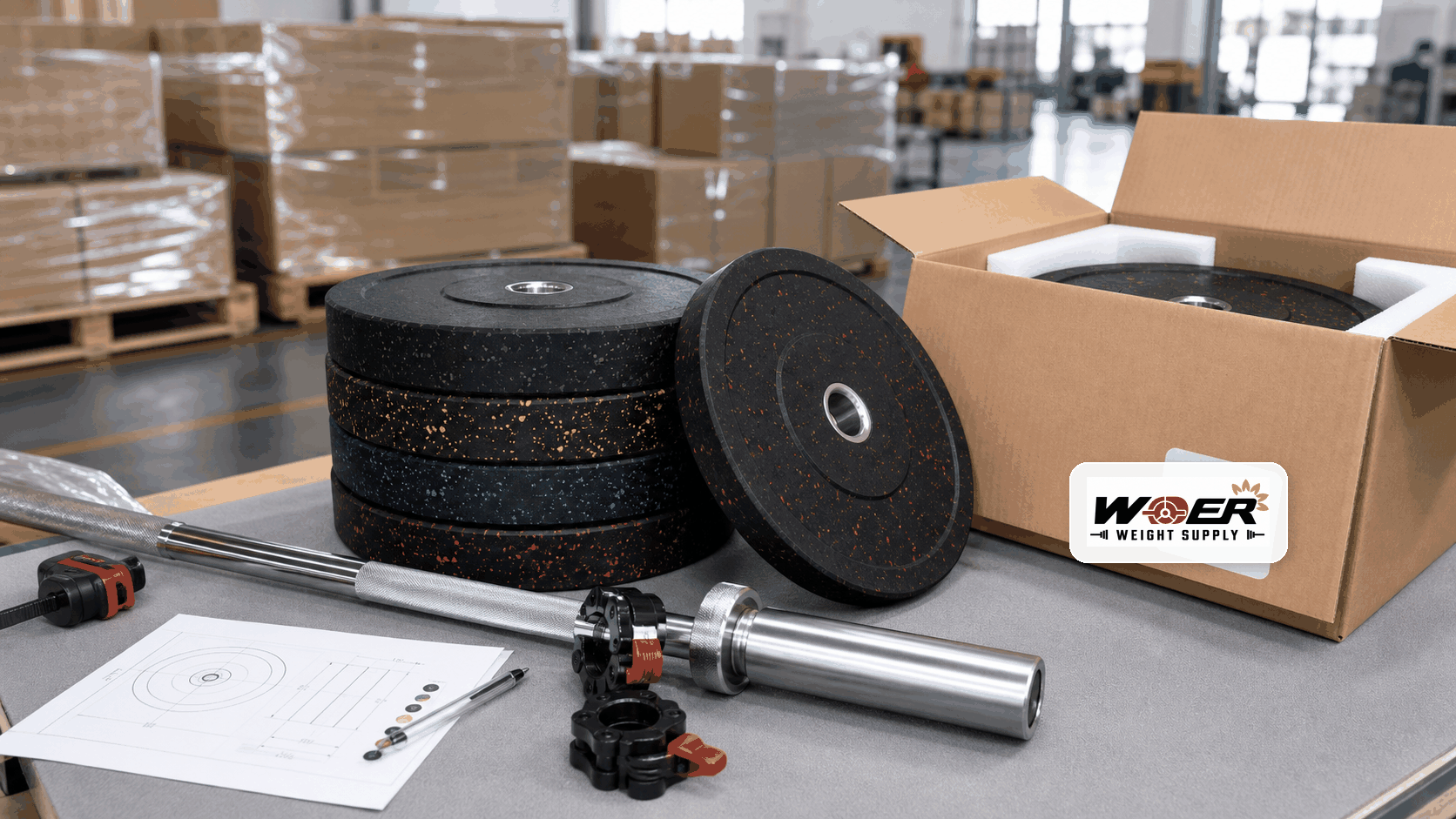
Custom logo gym weight orders should confirm product, artwork, packing and inspection details before production.
Konum: After H1
ALT: custom logo gym weights OEM packaging and inspection
Prompt: Photorealistic OEM gym weight packaging scene with bumper plates, Olympic bar sleeve, collars and export carton, one real WDER logo badge placed once on the carton label, no other text.
Sample approval helps prevent logo and packaging mistakes before mass production.
Konum: After sample approval section
ALT: custom logo gym weights sample approval before mass production
Prompt: Factory sample approval desk with dumbbell end cap, weight plate, color chips, carton sample and one small WDER logo sticker on a sample card, no other readable text.
Diğer kaynaklar
İlgili satın alma rehberleri
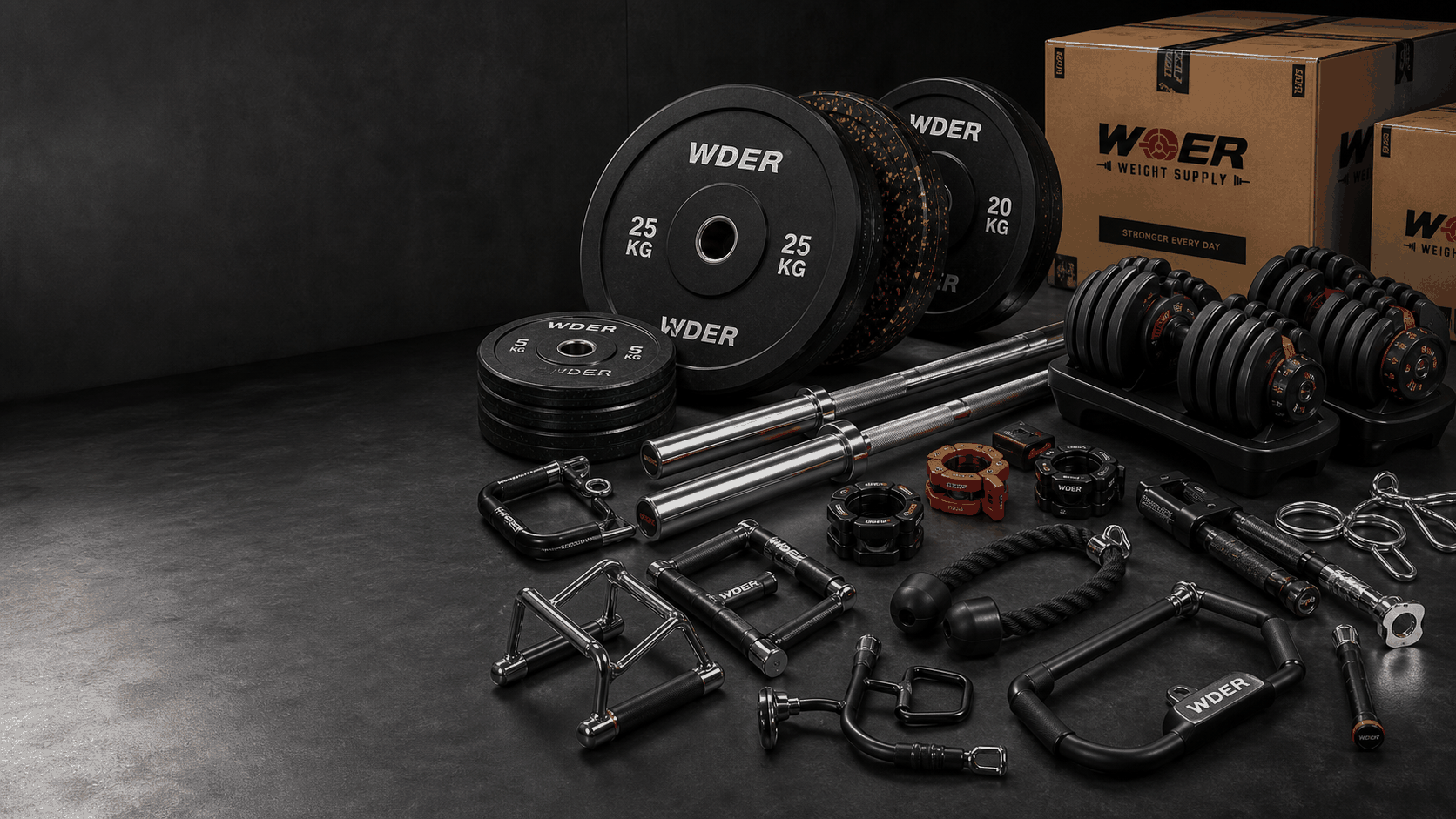
Commercial Gym Weight Equipment Checklist: What to Include Before You Request a Quote
A practical sourcing checklist for commercial gyms, hotel gyms, school weight rooms and distributors preparing a bulk free weight equipment RFQ.
13 min read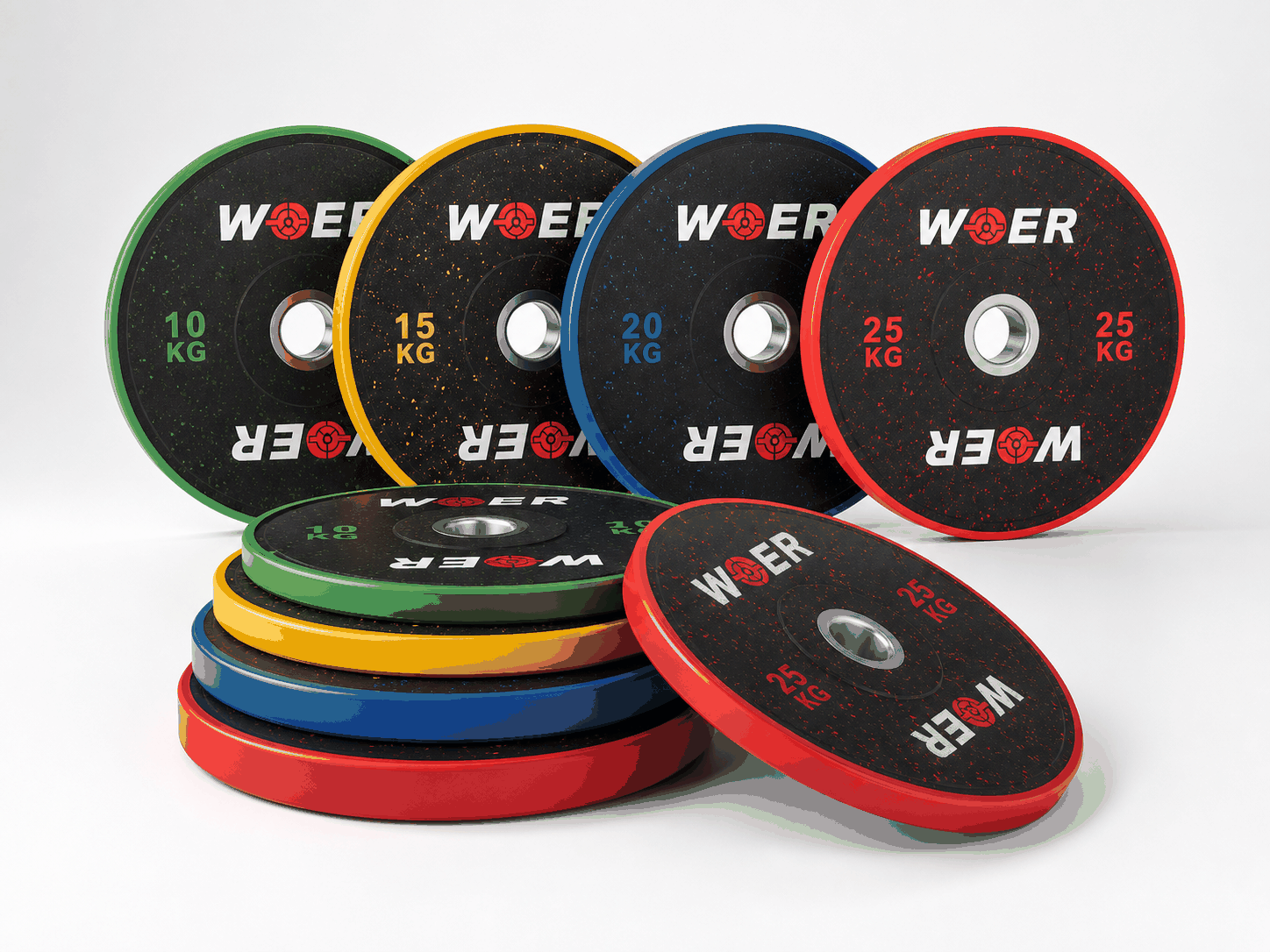
How to Choose Weight Plates for Commercial Gyms: Bumper, Rubber, Urethane and Steel Compared
Compare bumper, rubber coated, urethane and steel plates by application, durability, odor, packing, floor impact and procurement risk.
12 min read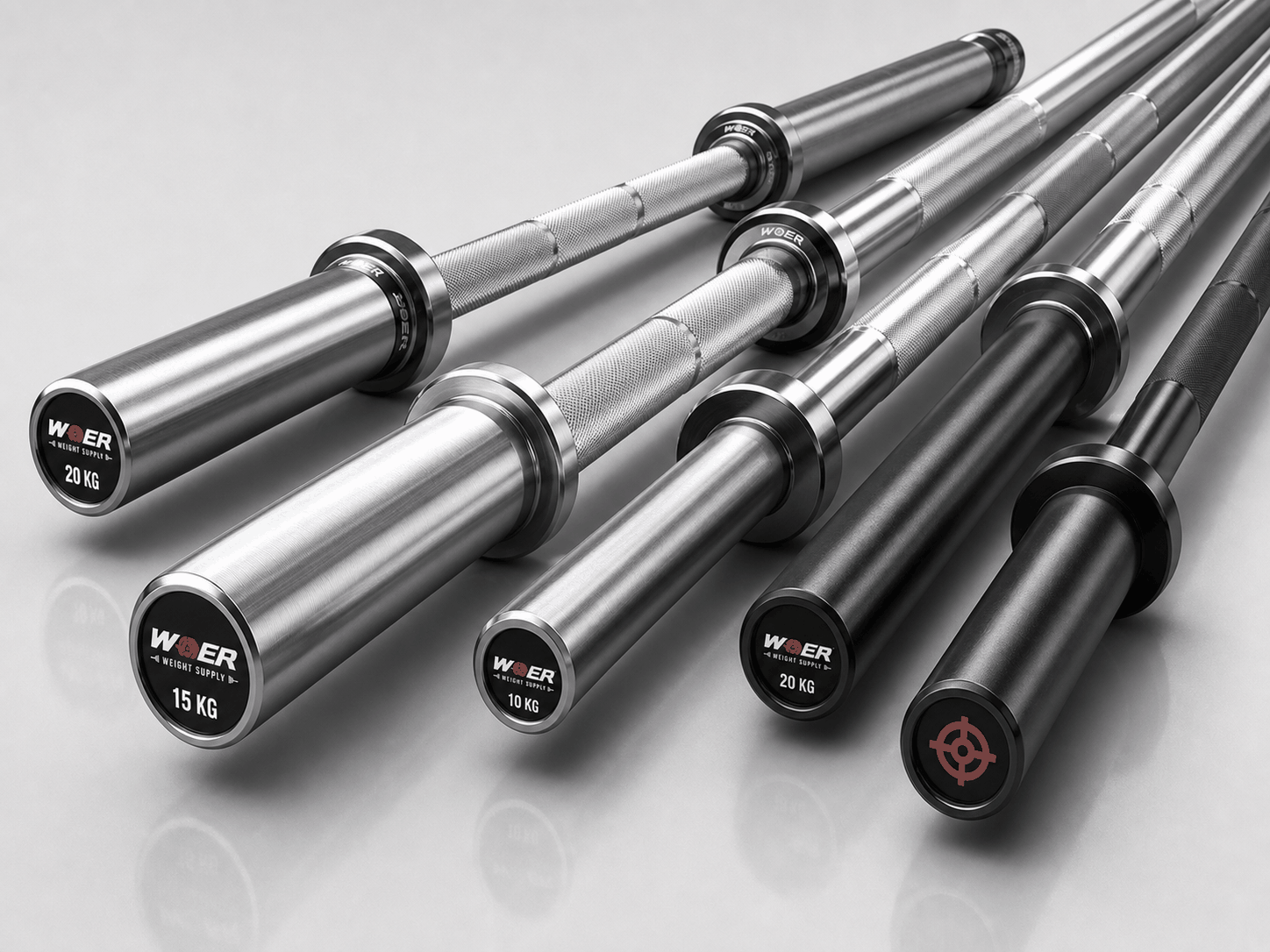
How to Source Olympic Barbell Sets from a Manufacturer: Specifications, QC and Shipment Checklist
A sourcing guide for importers, distributors and private label buyers comparing Olympic barbell set specs, QC and export packing.
13 min read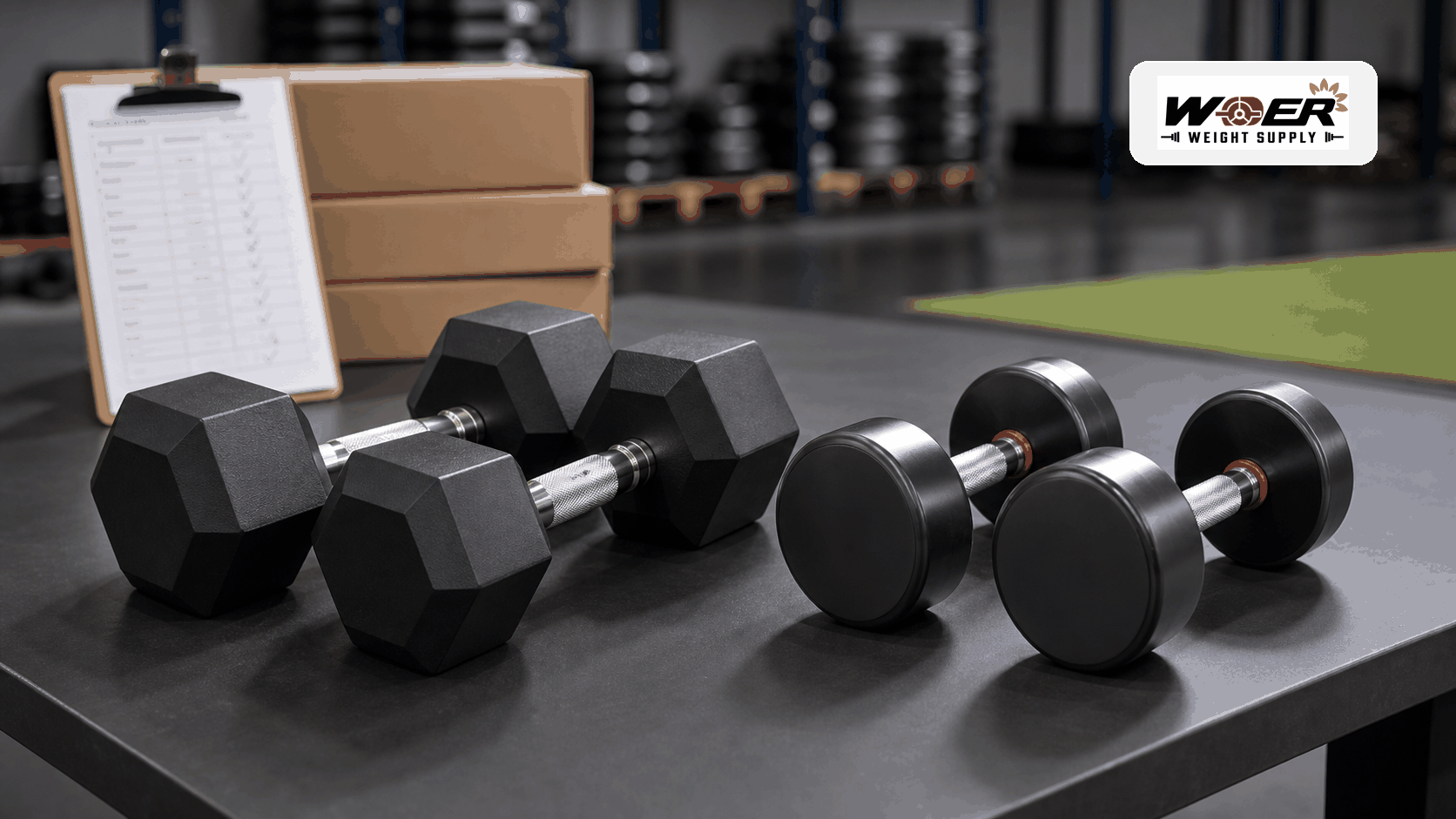
Rubber Hex vs Urethane Dumbbells for Commercial Gyms: Which Should Bulk Buyers Choose?
A practical dumbbell sourcing guide for buyers comparing rubber hex dumbbells and urethane dumbbells by application, budget, finish, odor, QC and export packing.
11 min read