Weight Plate Buying Guide
How to Choose Weight Plates for Commercial Gyms: Bumper, Rubber, Urethane and Steel Compared
Compare bumper, rubber coated, urethane and steel plates by application, durability, odor, packing, floor impact and procurement risk.
Introduction
Choosing weight plates for a commercial gym is not only a question of price per kilogram. Buyers must consider training application, floor impact, noise, odor, sleeve fit, coating durability, branding, storage, packaging and shipment risk. A plate that works well in a powerlifting gym may be unsuitable for a hotel gym. A low-cost plate that looks attractive in a catalog may cause problems if the center hole fit, rubber smell or carton strength is not controlled.
For overseas buyers, the decision becomes even more important because plates are heavy, freight-sensitive products. A wrong specification can increase shipping cost, damage rate or customer complaints. This guide compares the most common commercial weight plate types and explains how to prepare a clear RFQ for factory sourcing.
Quick Answer: Which Weight Plate Should You Choose?
For Olympic lifting and functional training, choose bumper plates. For general commercial free weight areas, choose rubber coated Olympic plates or tri-grip plates. For premium gyms, hotel gyms and high-end distributor programs, choose urethane plates. For powerlifting gyms, choose calibrated steel plates. For beginner programs and schools, consider technique plates and crumb rubber bumper plates.
The right choice depends on how the plate will be used, how much the buyer wants to spend, and what level of finish is expected by the end user.
Main Types of Weight Plates
| Plate Type | Best Application | Main Strength | Main Watch Point |
|---|---|---|---|
| Rubber bumper plates | Olympic lifting, functional training, commercial training zones | Suitable for dropped movements and standard Olympic diameter | Check bounce, insert stability, odor and drop-test conditions. |
| Competition bumper plates | Premium lifting zones, weightlifting clubs, branded sets | Color coding, steel hub, professional look | Higher cost and stricter packaging needed. |
| Crumb rubber bumper plates | Schools, training centers, high-volume rooms | Impact absorption and practical cost | Thicker profile may limit bar loading. |
| Rubber coated grip plates | General free weight areas, plate-loaded machines | Easy handling and cost-effective commercial use | Not ideal for repeated high drops. |
| Urethane plates | Premium clubs, hotel gyms, retail-grade programs | Clean finish, low odor, strong appearance | Higher price and careful surface inspection needed. |
| Calibrated steel plates | Powerlifting gyms, compact loading | Thin profile and accurate loading | Less floor protection and more specialized demand. |
| Change plates | Progressive loading, Olympic lifting sets | Small increments for training | Often forgotten in RFQs. |
Bumper Plates: When Drop Performance Matters
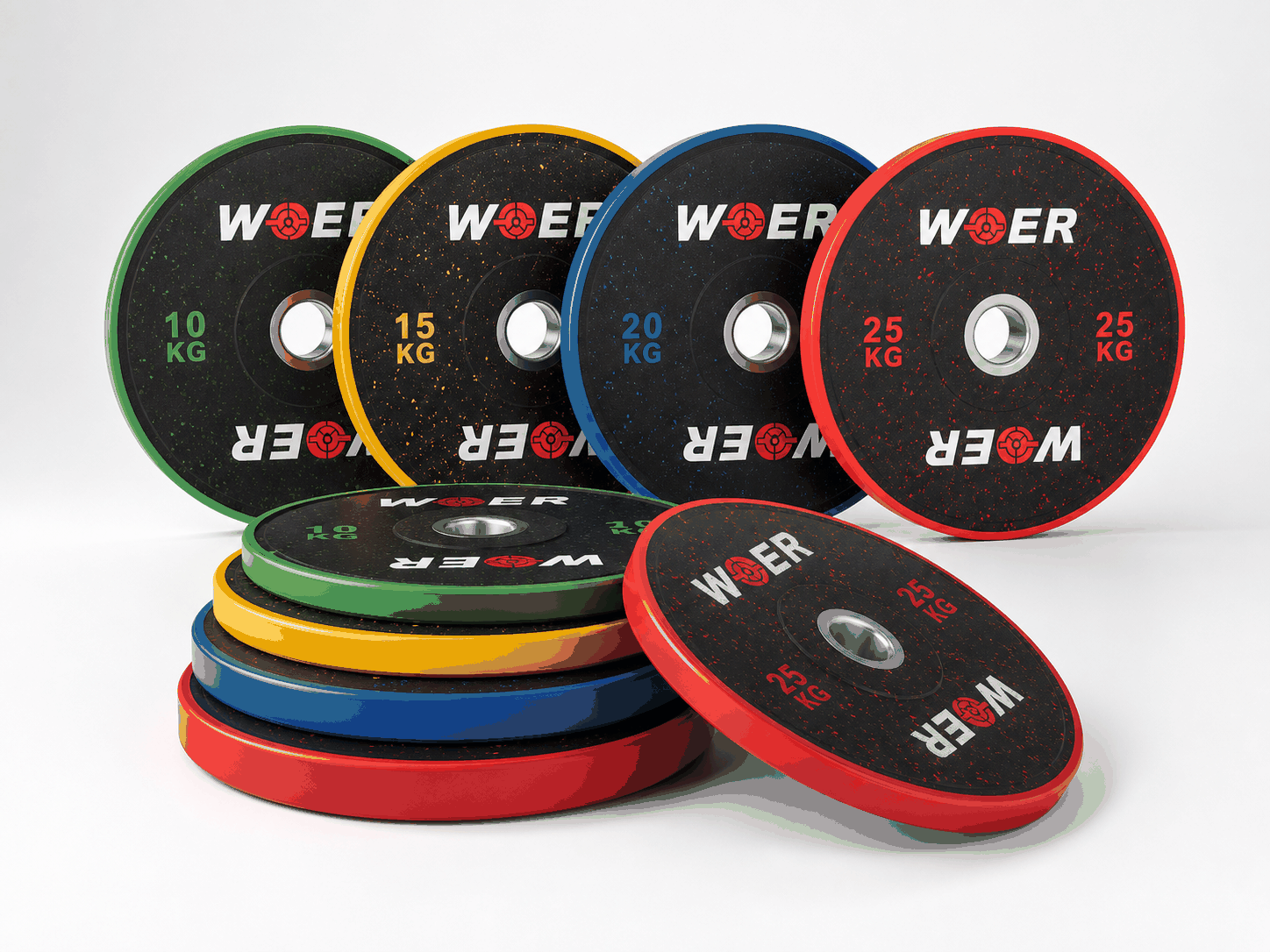
Bumper plates are designed for training environments where plates may be dropped during Olympic lifts or functional movements. A standard Olympic bumper plate normally has a 450 mm diameter, even at different weights, so the bar starts from a consistent height. The common center hole fit is around 50.4 mm for Olympic sleeves.
Buyers should understand that not all bumper plates are the same. Basic black rubber bumper plates are common for commercial gyms and distributors. Competition-style bumper plates use color coding and a steel hub for a more premium appearance. Crumb rubber bumper plates are usually thicker and offer strong impact absorption, making them useful for schools and high-volume training rooms.
Important RFQ details include rubber type, weight range, diameter, center ring or hub material, logo method and target use. Factory testing should include weight check, center hole fit, insert inspection, surface finish, smell review and sample drop testing under agreed conditions. Buyers should be careful with vague claims such as "unbreakable" or "lifetime drop proof." A professional supplier should explain the intended use environment and reasonable maintenance expectations.
Rubber Coated Olympic Plates: Practical for General Gym Use
Rubber coated Olympic plates are widely used in commercial free weight areas. They are suitable for bench press, squat racks, plate-loaded machines and general strength training. Tri-grip plates are especially practical because users can pick them up and move them more easily.
Compared with bumper plates, rubber coated grip plates usually vary in diameter by weight. They are not intended for repeated overhead drops. Their main value is cost-performance, handling convenience and broad commercial use.
During shipment inspection, buyers should check edge coating, handle area finish, logo clarity, weight marking, center hole fit and carton protection. Since plates are heavy, damaged cartons can lead to scratched products and difficult warehouse handling.
Urethane Plates: Premium Finish and Lower Odor
Urethane plates are often selected for premium commercial gyms, hotel gyms and distributors selling into higher-end markets. Urethane usually offers a smoother finish and lower odor than standard rubber. It can also present brand logos and color details cleanly.
The main limitation is cost. Urethane plates are usually more expensive, so buyers should use them where the end customer values appearance, durability and gym image. For budget gyms or school rooms, rubber plates or bumper plates may be more practical.
In factory inspection, pay attention to small cosmetic defects. Premium buyers often reject visible bubbles, scratches, inconsistent color, uneven edges or weak logo printing. Urethane products need careful packing because a clean surface is part of the value.
Steel and Calibrated Plates: For Powerlifting and Compact Loading
Steel plates and calibrated powerlifting plates serve a different market. They are thinner than most rubber or bumper plates, allowing more weight to be loaded on the bar. Calibrated plates are often used by powerlifting gyms and strength clubs that care about weight accuracy and compact profile.
Steel plates are not the best choice for noise-sensitive hotel gyms or spaces where floor protection is the top concern. They are more specialized, but they can be a strong SKU for strength-focused distributors.
KG or LB: Choose by Market
Weight marking should match the target market. The United States commonly uses LB plates, while many international markets prefer KG. Some distributors sell both. A private label buyer should confirm the marking system early because tooling, printing, packaging and product pages all depend on it.
If selling to multiple markets, do not assume that one plate line fits all. A buyer may need separate KG and LB SKUs, different carton marks and different catalog pages.
Center Hole Fit and Sleeve Compatibility
Most commercial Olympic plates are made for 2 inch Olympic sleeves, commonly using a center hole around 50.4 mm. If the hole is too tight, plates become difficult to load. If it is too loose, users may complain about excessive movement.
For bulk orders, the buyer should ask the supplier to check plate fit on representative Olympic bar sleeves before shipment. This is a simple factory testing step that prevents many practical complaints.
Odor, Coating and Indoor Use
Rubber odor is a real concern, especially for hotel gyms, boutique studios and indoor commercial facilities. Buyers should discuss material options and ventilation expectations. Virgin rubber, recycled rubber and mixed compounds can differ in smell, cost and performance.
It is not professional to promise that every rubber product has "zero smell." A more credible supplier explains the material, expected odor level, storage conditions and ventilation before installation. For odor-sensitive projects, urethane may be a better choice.
Match Plates to Flooring and Training Zones
Weight plate selection should also consider flooring. A facility with lifting platforms can use bumper plates more confidently in Olympic lifting zones. A general gym with rubber flooring but no dedicated platforms may still choose bumper plates, but user rules and coaching matter. A hotel gym with thinner flooring and noise-sensitive rooms nearby should avoid encouraging dropped lifts and may prefer urethane or rubber coated grip plates for controlled use.
Storage also changes the decision. Bumper plates are usually wider, especially in lighter weights and crumb rubber versions. If the gym has limited plate tree space, a thinner rubber coated or steel plate may be easier to store. For powerlifting gyms, thin calibrated plates help load more weight on the sleeve. For beginner training, the standard 450 mm diameter of technique plates helps teach pulling positions even at lighter weights.
SKU Strategy for Distributors and Importers
Distributors should think beyond one project order. A good plate program should create a logical product family that sales teams can explain. For example, the entry-level line can use black rubber bumper plates or rubber coated grip plates. The mid-range line can use color speckle bumper plates or training bumper plates. The premium line can use competition bumper plates or urethane plates.
Private label buyers should keep SKU names, weight markings and packaging consistent. If the 10 kg plate uses one logo style and the 20 kg plate uses another, the product line looks less professional. If cartons use inconsistent labels, warehouse handling becomes slower.
For online retailers, plate packaging matters more than many factories expect. Retail buyers may need barcode labels, product photos, warning labels, instruction cards, carton size control and stronger outer cartons for parcel delivery. For B2B gym projects, pallet packing and carton strength may be more important than retail graphics.
Sample Approval Before Bulk Production
Samples are useful when a buyer is changing material, logo method, color, packaging or market positioning. A sample cannot fully represent mass production, but it can reveal important details before a large order.
During sample approval, check plate weight and marking, center hole fit, rubber smell or urethane finish, logo position, edge finish, carton size and catalog photo needs. If the buyer approves a sample with comments, those comments should be written clearly in the purchase order or production confirmation.
Packaging and Shipment Preparation
Weight plates are heavy and can damage cartons if packing is weak. Export packaging should be planned by plate type and order quantity. Common options include poly bag plus carton, individual retail carton, set carton, heavy-duty export carton, pallet packing with corner protection and retail color box plus master carton.
Before shipment, request photos of carton labels, pallet wrapping and container loading. For private label orders, inspect logo, weight marking, barcode, carton mark and color box artwork before full production packing.
FAQ
Are bumper plates worth it for commercial gyms?
Bumper plates are worth it if the gym includes Olympic lifting, functional training or lifting platforms. For general machine loading and bench areas, rubber coated Olympic plates may be more cost-effective.
What is the difference between rubber plates and urethane plates?
Rubber plates are usually more cost-effective and widely used. Urethane plates normally offer cleaner finish, lower odor and stronger premium presentation, but the price is higher.
Can rubber coated plates be dropped?
Rubber coated grip plates are not designed for repeated overhead drops. For dropped movements, bumper plates are the more suitable option.
What center hole size should Olympic plates use?
Commercial Olympic plates commonly use a center hole around 50.4 mm for Olympic bar sleeves. Buyers should confirm sleeve fit during factory inspection.
Can I order custom logo weight plates?
Yes. Common logo options include printed logo, molded logo, raised logo, laser mark, hub mark or private label packaging. The best method depends on plate type and order quantity.
Conclusion
Choosing weight plates for commercial gyms requires more than comparing price. The buyer should match plate type to application, confirm technical details, consider odor and finish, and plan safe export packaging. Bumper plates, rubber coated plates, urethane plates and steel plates all have a place in the market, but each serves a different training environment and budget level.
Görsel planı
Bu makale için görsel önerileri
Different plate types serve different commercial gym applications.
Konum: After H1
ALT: bumper plates rubber plates urethane plates and steel plates comparison
Prompt: Realistic product comparison photo showing black bumper plate, rubber tri-grip Olympic plate, premium urethane plate and calibrated steel plate on a clean gym floor, commercial product photography, neutral lighting, no text
Bumper plates are suitable for Olympic lifting and dropped movements.
Konum: After bumper plate section
ALT: commercial rubber bumper plate center ring detail
Prompt: Close-up realistic photo of black rubber bumper plate with stainless steel center ring on Olympic bar sleeve, factory inspection setting, detailed rubber texture, no logo text
Heavy weight plates need reinforced cartons and pallet protection.
Konum: After packaging section
ALT: weight plate export packaging cartons pallets factory
Prompt: Realistic factory warehouse photo of Olympic weight plates being packed into heavy-duty cartons with foam and pallet protection, shipment inspection scene, professional lighting, no text
Diğer kaynaklar
İlgili satın alma rehberleri
Commercial Gym Weight Equipment Checklist: What to Include Before You Request a Quote
A practical sourcing checklist for commercial gyms, hotel gyms, school weight rooms and distributors preparing a bulk free weight equipment RFQ.
13 min read
How to Source Olympic Barbell Sets from a Manufacturer: Specifications, QC and Shipment Checklist
A sourcing guide for importers, distributors and private label buyers comparing Olympic barbell set specs, QC and export packing.
13 min read
Rubber Hex vs Urethane Dumbbells for Commercial Gyms: Which Should Bulk Buyers Choose?
A practical dumbbell sourcing guide for buyers comparing rubber hex dumbbells and urethane dumbbells by application, budget, finish, odor, QC and export packing.
11 min read
Custom Logo Gym Weights: OEM Checklist for Plates, Barbells and Dumbbells
A factory sourcing checklist for private label buyers ordering custom logo plates, barbells, dumbbells, collars and retail packaging.
12 min read